
Supertramp: Musical Alchemy
Beginnings: London, 1969
Rick Davies was not destined to be a rock star. He was a Swindon kid, more comfortable at the piano than on a stage, with a love for jazz, blues, and Ray Charles. By 1969, his band The Joint had collapsed, and most musicians would have gone home. But Davies had a secret weapon: a Dutch millionaire patron, Stanley “Sam” Miesegaes, who had both money and faith in Davies’s talent.
Davies placed an ad in Melody Maker looking for musicians. Among those who answered was Roger Hodgson, a wiry 19-year-old with an angelic tenor and the polished background of English private schools. Hodgson had grown up on The Beatles, The Hollies, and the melodic pop of the 60s, and his voice carried the fragile sweetness of someone born to sing.
Davies and Hodgson could not have been more different—working-class grit meets dreamy idealism—but in those differences lay their magic.
At first, they called themselves Daddy, rehearsing endlessly in a Kent farmhouse. The sessions were chaotic: they had only four songs, two of them covers. Hodgson was on bass. Davies, buried in his organ, rarely sang. And when they finally landed a gig in Munich, their set was so short they padded it with a ten-minute cover of Dylan’s All Along the Watchtower.
It wasn’t promising. But something about the contrast between Hodgson’s light and Davies’s dark hinted at a future.
Breakfast in America: Lightning in a Bottle
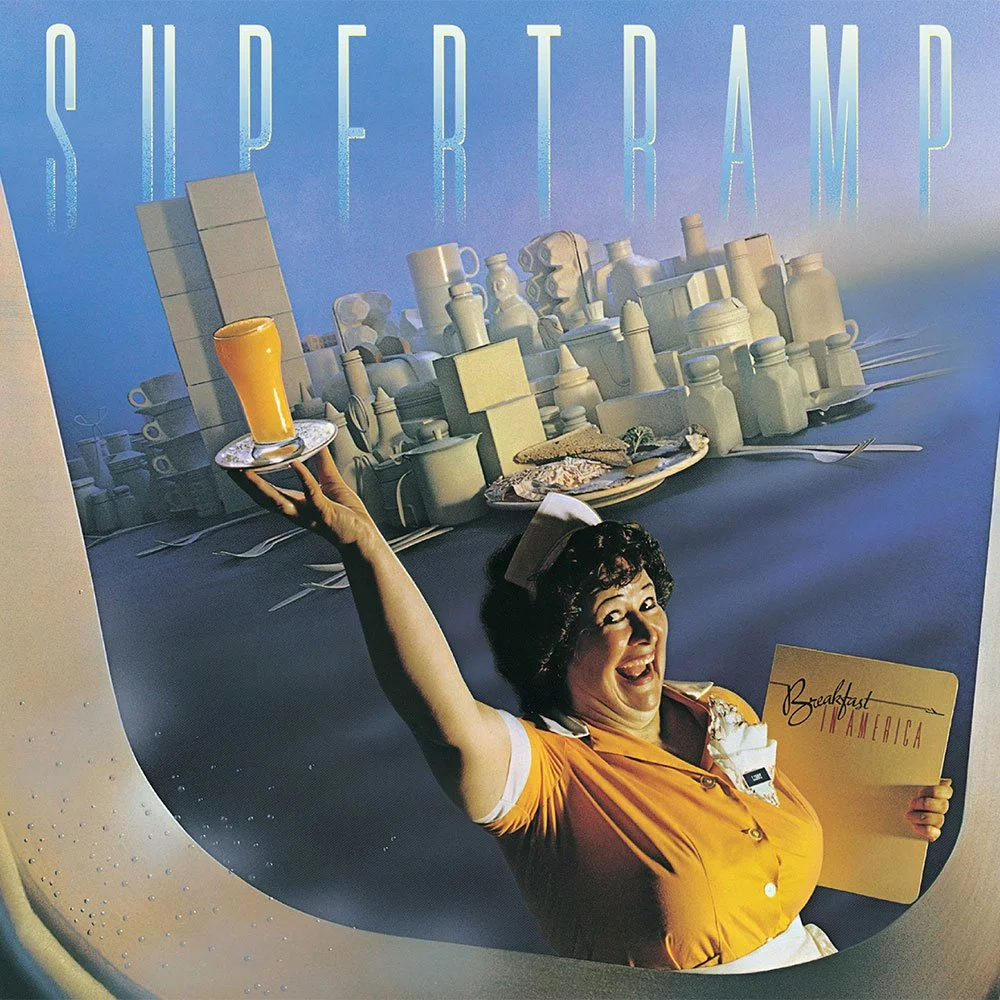
Their masterpiece arrived in 1979. Breakfast in America was everything they had been building toward: bright, ironic, bittersweet, and perfect for the FM radio boom.
Released in March 1979, it became a global phenomenon:
The Logical Song, a wistful lament for innocence lost, hit #1 in Canada and Top 10 worldwide.
Goodbye Stranger, sly and cynical, balanced it with humor.
Take the Long Way Home, captured suburban disillusionment.
Breakfast in America, winked at American excess.
The album topped charts in the U.S. and Canada, won two Grammys, and sold more than 18 million copies. In Canada, it went diamond.
Rolling Stone Magazine said, “a textbook-perfect album of post-Beatles, keyboard-centered English art rock that strikes the shrewdest possible balance between quasi-symphonic classicism and rock & roll ... the songs here are extraordinarily melodic and concisely structured, reflecting these musicians' saturation in American pop since their move to Los Angeles in 1977."
Supertramp had gone from obscurity to selling out arenas worldwide.
Davies’s Supertramp
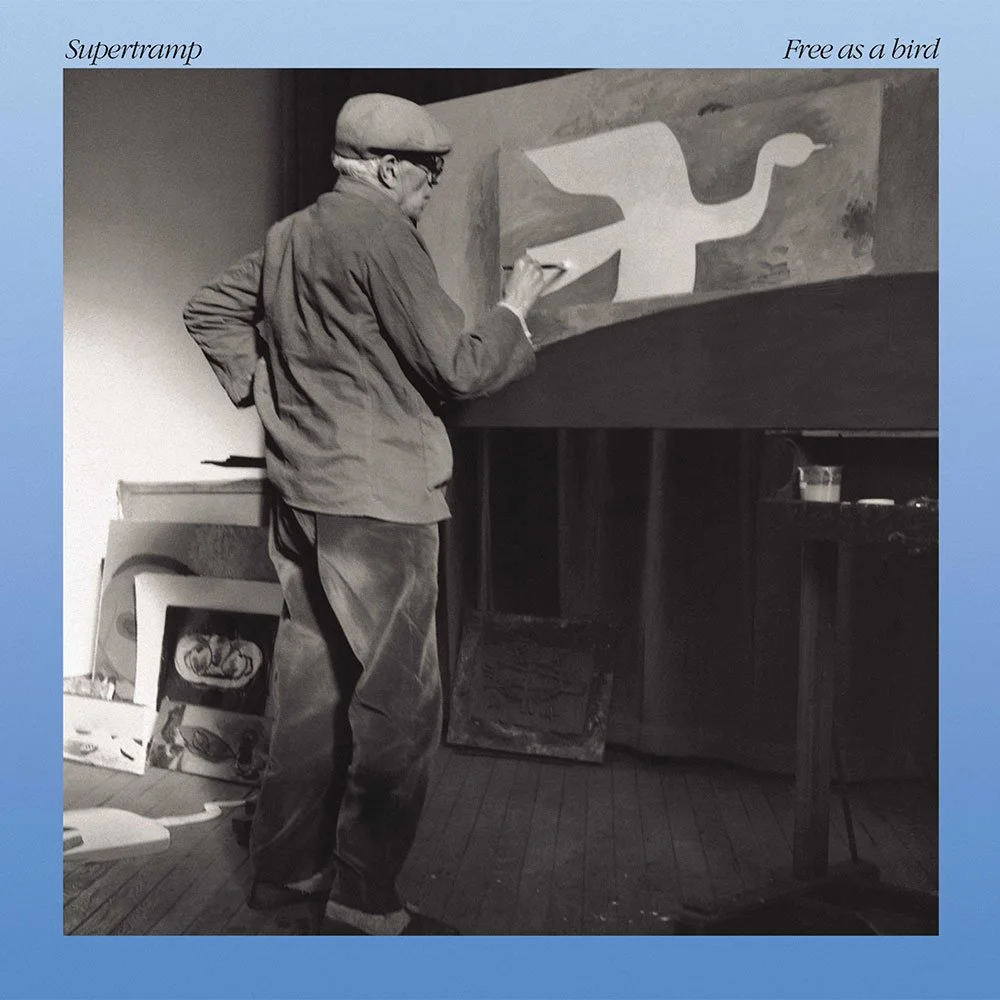
Davies carried the band forward. Brother Where You Bound (1985) swung back toward prog, its title track a Cold War epic with David Gilmour on guitar. Free as a Bird (1987) leaned into synthesizers and dance beats, producing a U.S. dance chart #1.
The band toured but by 1988, Supertramp quietly disbanded.
The Long Fade and Returns
Like many rock giants, Supertramp never stayed buried. In 1996, Davies revived the band with Helliwell, Siebenberg, and guitarist Mark Hart. Some Things Never Change (1997) reached back to their classic sound. Slow Motion (2002) did the same. These records have mysteriously never been available on the streaming services and are currently sought after by fans on bootleg websites.
Supertramp’s final official performance came in Madrid in 2012. Plans for a 2015 European tour were canceled when Davies was diagnosed with multiple myeloma.
Climbing Higher: Even in the Quietest Moments…
The mid-70s were relentless. Crisis? What Crisis? (1975) was rushed and drawn from leftover material, but Even in the Quietest Moments… (1977) was different. Recorded in Colorado, its snowy cover photo (a grand piano on a mountaintop, draped in snow) mirrored the soaring quality of the music.
Hodgson’s Give a Little Bit, first written as a teenager, became a worldwide hit, while Davies’s songs added shadows to the light. By this point, the band had relocated to Los Angeles, embedding themselves in the California music scene.
Supertramp had become a finely tuned machine: Davies the grounding presence, Hodgson the ethereal lift, with Helliwell’s sax weaving the glue in between.
Famous Last Words: A Partnership Ends
But success magnified the cracks. Hodgson and Davies were drifting further apart—not in hostility, but in philosophy. Hodgson built a home in the Northern California mountains, where he raised his family and pursued spiritual interests. Davies stayed in Los Angeles, more rooted in urban grit.
Their last album together, …Famous Last Words… (1982), was polished but uneasy. Its title seemed like prophecy. The hits—It’s Raining Again, My Kind of Lady—couldn’t mask the fact that Hodgson was ready to leave.
After the 1983 tour, he did.
Legacy
Supertramp were always a band of contradictions. Too pop for prog purists, too prog for pop fans. A group built on two men who rarely wrote together, credited jointly but composed separately.
And yet, those contradictions became their identity. Hodgson’s falsetto gave voice to longing, innocence, and light. Davies’s baritone delivered grit, sarcasm, and shadow. Together, they created songs that remain timeless:
The Logical Song, still taught in classrooms as a critique of conformity.
Give a Little Bit, still used in campaigns for kindness.
Goodbye Stranger, still slyly winking from classic-rock radio.
By 2007, they had sold over 60 million albums worldwide. In Canada, they remain near-mythic. In France, It’s Raining Again hit #1. Globally, Breakfast in America is a cultural touchstone of the late 1970s.
Supertramp were never the coolest band. They didn’t define a fashion. They didn’t lead a movement. But they crafted something rarer: songs that were intelligent yet accessible, eccentric yet enduring.
At their heart were two men—Rick Davies, the founder who kept the name alive, and Roger Hodgson, the dreamer whose voice gave the band its wings. Their story is one of contrasts, tension, and improbable alchemy.
A band named for a tramp became, improbably, one of the most successful rock groups of their era.